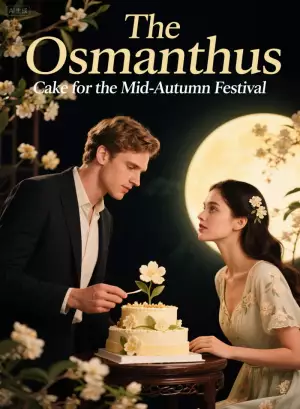
Chapter 1 of "The Osmanthus Cake for the Mid-Autumn Festival"
I stood downstairs, watching the setting sun dye the glass curtain wall in warm shades of gold.
The autumn wind swept a few sycamore leaves, which drifted slowly onto the tips of my black leather shoes.
The tip of my shoe was dusted with a bit of dirt, brushed against the roadside by the crowd while queuing to buy Osmanthus Cake this morning.
Today is the Mid-Autumn Festival; most people on the street carry gift boxes, hastening home with hurried steps.
A man in a plaid shirt held two boxes of mooncakes and cradled a sleeping child, carefully avoiding the crowd—the sight bore a striking resemblance to my father back then.
I, too, held a kraft paper bag in my hand; inside were Blair Scott's favorite Osmanthus Cakes.
The corner of the paper bag was tightly wrinkled in my grasp—not from nervousness, but because it reminded me how, twenty years ago, my mother held my hand just like this, tucking freshly bought Osmanthus Cakes close to her chest, saying she would wait for me to finish the mooncake before giving me the cakes as a snack.
This morning, I deliberately took a detour to the old town to buy it, standing in line for a full forty minutes.
An old lady ahead kept murmuring to the cake seller, "My granddaughter loves your cakes," for three whole minutes. Standing behind, my ears filled with the echo of my mother's voice from years ago.
Blair Scott always said that the Osmanthus Cakes from chain bakeries were too sweet and cloying; only the old brand at the end of the alley truly captured the flavor.
When she first mentioned it to me, I was stunned for a long moment—that was the very shop my parents had taken me to back then. After I was sent to the welfare home, I never returned.
My fingertips brushed against the paper bag, feeling the warm shape of the Osmanthus Cake.
But only I knew what kind of poisoned intentions lay hidden within that soft sweetness.
Just as Lily once smiled, handing me a piece of candy before turning and crashing into my parents with her car.
My phone vibrated — a message from Blair Scott: "Yale, where are you? Mom has laid out the dishes."
I replied, "Almost there," then tucked the phone back into my pocket.
The screen was still glowing; the lock screen was a photo Blair Scott took last Mid-Autumn Festival.
She leaned against my shoulder, her eyes crescent-shaped with a smile, while my face remained expressionless, forced by her to twitch the corners of my lips.
I lifted my head to gaze at the distant moon, just beginning to emerge, like a piece of jade veiled in thin silk.
Clouds drifted across, concealing part of the moon, much like the moonlight slipping through the gaps between my fingers as I covered my face and wept after the car accident back then.
Twenty years ago on the Mid-Autumn Festival, the moon was just as full.
That day, I wore new sneakers that my father had bought after saving half a month's wages; the white uppers embroidered with a little tiger.
I tugged at my parents' hands, eager to buy mooncakes. Father said he would get me the lotus seed paste with salted egg yolk flavor, and mother laughed.
As we passed beneath the osmanthus tree on the street corner, my mother plucked a small sprig of blossoms and pinned it to my collar, saying, "You should carry a sweet fragrance; then when you go to kindergarten, others will want to play with you."
I pressed that sprig of osmanthus between the pages of my textbook. It was only when the staff at the welfare home sorted through my belongings that they discovered it had long since withered into fragments.
But after that day, I never smelled the scent of osmanthus again.
As I hailed a taxi, the driver was humming a tune.
Rolling down the window, he smiled and asked, "Young man, going home for the Mid-Autumn Festival? I see you're carrying cakes—those must be for your family, right?"
I clenched the paper bag tightly and muttered a vague "Mm."
The driver didn't notice my unease and continued chatting: "After this ride today, I'll head home. My daughter's waiting for me to eat mooncakes—she insists on the five-nut kind, saying it tastes just like when she was little."
When he spoke of his daughter, the laughter in the corners of his eyes was impossible to hide.
I watched the streets flash past outside the window and recalled how my father was just the same—chatting with the taxi driver about my embarrassing moments, saying, "My son insisted on wearing new sneakers today; otherwise, he wouldn't come along with me."
The car passed through the intersection just as the red light turned on.
A Mercedes was parked in the adjacent lane, remarkably similar to the model Lily used to drive years ago.
I stared at the car, my fingers absentmindedly fidgeting with the seat until the driver said, "The light's green," snapping me back to reality—after all these years, I realize familiar scenes can still wound me.